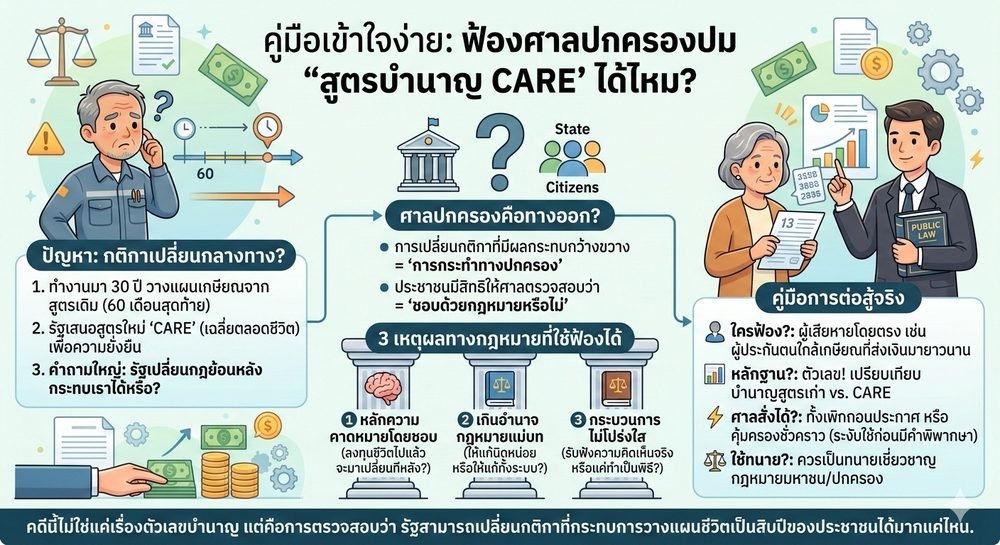
📊 อินโฟกราฟิก: คู่มือเข้าใจง่าย ฟ้องศาลปกครองปม "สูตร CARE" ได้ไหม?📊 Infographic: A Plain-Language Guide to Challenging the CARE Formula in Thailand's Administrative Court
Imagine this: You've worked 30 years. You've never missed a Social Security contribution. You built your retirement plan around the rules the government set.
Then one day, the rules might change. A new formula called "CARE" is proposed — in the name of fund sustainability.
The question is no longer which formula is better — it's: does the government have the right to change the rules mid-game?
Under Thai law, when a government agency issues a decree, regulation, or resolution that significantly affects citizens, it constitutes an "administrative act." If citizens believe this act is unlawful, they can petition Thailand's Administrative Court to review it.
Millions of workers contributed for decades under the old formula, using it as the basis for their life planning. If the state retroactively changes the calculation, it could be seen as altering the conditions after citizens have already invested their working lives — a heavily weighted principle in administrative law.
The key question: does the law authorize only administrative detail — or the wholesale restructuring of workers' rights? If the court finds the agency overstepped, the entire resolution could be voided.
⚠️ ขึ้นอยู่กับการตีความ · Depends on Interpretation
Policies affecting millions of workers require genuine public disclosure of impact data and real stakeholder consultation. If it was merely a ceremonial process, it could be found to violate principles of good governance.
⚠️ ตรวจสอบกระบวนการ · Check the Process
👥 ใครควรเป็นผู้ฟ้อง👥 Who Should File the Case?
ศาลให้ความสำคัญกับ "ผู้เสียหายโดยตรง"
The Court Prioritizes "Directly Aggrieved Parties"
Using retrospective data to recalculate benefits may constitute retroactive rule-making that damages pre-existing rights — a fundamental prohibition in the rule of law
If changing the formula restructures rights entirely but the enabling law only authorizes administrative details — the court may void the entire system
If the court determines immediate harm would occur when the formula takes effect, it can issue an injunction before final judgment — with immediate system-wide consequences
ตอนนี้ฟ้องได้เลยไหม?Can workers file a case right now?
ยังไม่ได้ครับ — ต้องรอให้กฎหมายหรือกฎกระทรวงประกาศใช้อย่างเป็นทางการก่อน ศาลปกครองรับคดีได้เมื่อมีการกระทำทางปกครองที่มีผลแล้ว แต่สามารถเตรียมหลักฐานและรวบรวมกลุ่มผู้เสียหายได้ตั้งแต่ตอนนี้Not yet — you must wait for the law or ministerial regulation to be officially enacted. The Administrative Court only accepts cases once an administrative act has taken effect. However, you can start collecting evidence and organizing affected workers right now.
ต้องใช้ทนายหรือไม่?Do you need a lawyer?
แนะนำอย่างยิ่งให้ใช้ทนายที่เชี่ยวชาญกฎหมายมหาชนและคดีปกครองโดยเฉพาะ เพราะต้องต่อสู้กับทีมกฎหมายของรัฐโดยตรง ความเชี่ยวชาญในเรื่อง Ultra Vires, Legitimate Expectations และ Due Process เป็นสิ่งจำเป็นHighly recommended. You need a lawyer specializing in public law and administrative litigation specifically — you'll be facing the government's legal team directly. Expertise in Ultra Vires, Legitimate Expectations, and Due Process is essential.
ถ้าแพ้คดี จะเกิดอะไรขึ้น?What happens if the case is lost?
คดีสามารถอุทธรณ์ต่อได้ และแม้แพ้ — กระบวนการฟ้องเองก็สร้างแรงกดดันทางการเมืองและสาธารณะที่สำคัญ บังคับให้รัฐต้องชี้แจงกระบวนการออกนโยบายต่อสาธารณะCases can be appealed. Even a loss creates significant political and public pressure — forcing the government to publicly justify its policy-making process, which has independent value.
คดีนี้สำคัญแค่ไหนในเชิงบรรทัดฐาน?How significant is this case as a legal precedent?
สูงมาก — หากศาลตัดสินว่ารัฐไม่สามารถเปลี่ยนกติกาบำนาญโดยกระทบสิทธิย้อนหลังได้ จะเป็นบรรทัดฐานที่ปกป้องสิทธิแรงงานไทยในระยะยาว และอาจนำไปสู่การปฏิรูปกระบวนการออกนโยบายสาธารณะทั้งระบบExtremely significant — if the court rules that the government cannot retroactively alter pension entitlements, it sets a landmark precedent protecting Thai workers' rights long-term, and could drive comprehensive reform of public policy-making processes.
It asks a defining question for Thai society: how much can the government change rules that citizens have used to plan their entire lives? And the answer may not come from politics — but from a courtroom.