The Court Did NOT Postpone the Election! So Why Did It Stop?
Two distinct events, often confused: the Central Administrative Court's order vs. the SSO Election Committee's own decision — plus an analysis of the odds of a delay past 27 September 2026
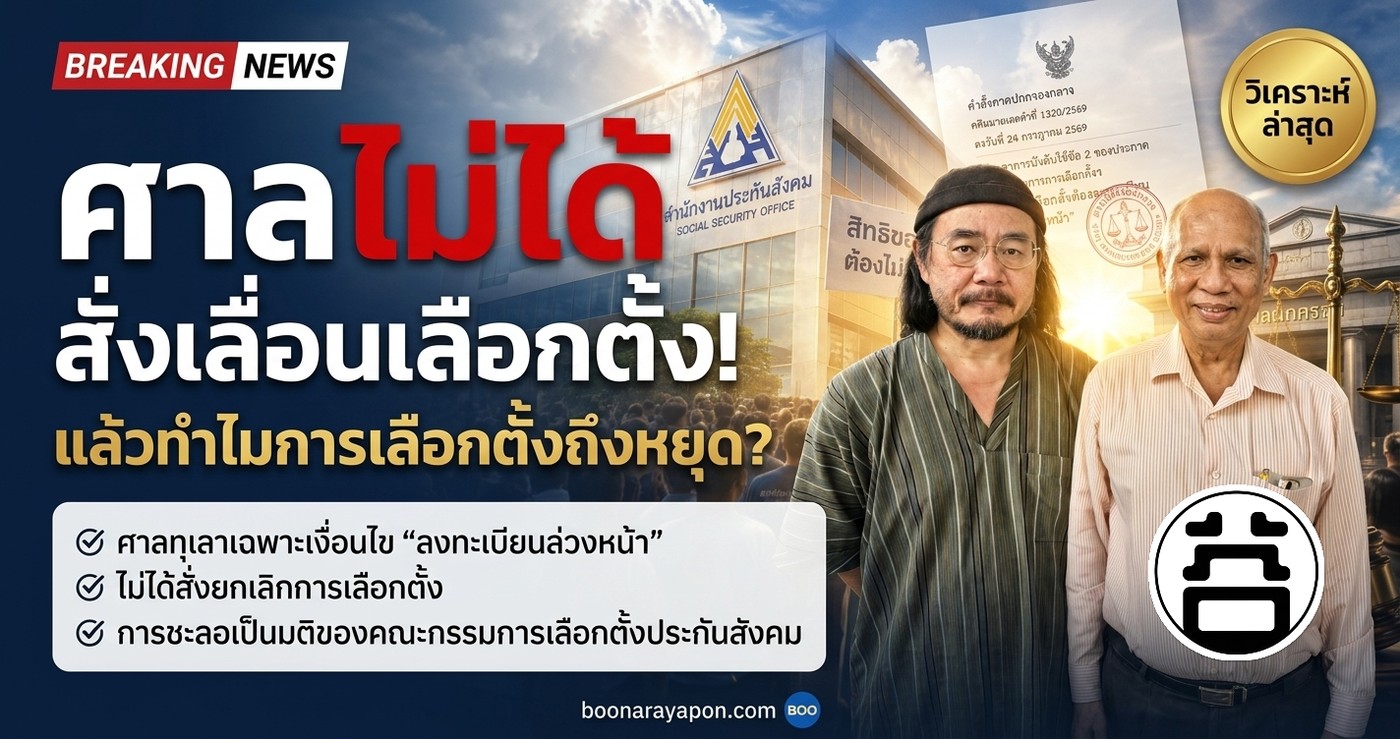
This article explains the distinction between the Central Administrative Court's order and the SSO's own administrative decision — the single most commonly misunderstood point in this story. The forecast of a possible delay in this article is the campaign's own analysis based on facts available as of early August 2026, not a confirmed outcome — the situation may change at any time as the case and any appeal develop. Please also check the full case-status page for the latest confirmed developments.
⚖️ Two Separate Things, Often Confused
The main source of confusion is that many people believe "the court ordered the election postponed," when in fact two distinct events occurred:
Put simply: the court said "the advance-registration requirement cannot be enforced for now." SSO itself is the one that then decided to "pause everything," rather than proceeding with the election after dropping that requirement and immediately using its existing insured-person database to declare eligible voters.
📅 Why Is a Delay Past 27 September 2026 So Likely?
Both the government and SSO have affirmed they intend to proceed with the election — the open question is "when," not "whether."
🔮 Three Possible Paths Forward
The table below is an assessment of likelihood based on general legal principles and typical government-agency practice, drawing on the reasoning already stated in the interim protective order — it is not a prediction of the court's final judgment, which has no set date.
| Path | Likelihood | Reasoning |
|---|---|---|
| Court upholds the suspension and permanently strikes the registration requirement | High | Consistent with the reasoning already given in the interim order; SSO already has a complete insured-person database |
| Court reverses the suspension after appeal | Medium | Depends on whether the Supreme Administrative Court finds the requirement necessary for managing the election |
| Court upholds the original registration requirement in full | Low | Inconsistent with the reasoning the court already gave in its first interim order |
Without waiting for a final judgment, the Labour Ministry could resolve this by amending the election regulation to remove the advance-registration requirement, then immediately declaring everyone in SSO's existing Section 33/39/40 insured-person database eligible to vote — a path that would let the process move forward faster than waiting for the case to reach a final verdict.
❓ Frequently Asked Questions
Did the Central Administrative Court order the SSO Board election postponed?
Not directly. The court issued an interim protective order (24 July 2026) suspending enforcement of only Clause 2 of the announcement. It did not order the election date postponed or cancelled.
So why was the entire process paused?
It was an administrative decision by SSO's own election committee (27 July 2026) to wait for legal clarity before proceeding — not a direct court order.
Is there a risk the election will be cancelled entirely?
The risk is very low. Both the government and SSO have affirmed they intend to proceed. The uncertain part is the actual date, not whether it will happen.
📌 Follow the Case Closely
The situation is still unfolding, depending on how quickly the Supreme Administrative Court acts and how fast the Labour Ministry can amend the regulation.
🚨 Read the Full Case Status → 🤝 Deep Dive with Seri Nuwong (Thai) →