after 23–30 years paid in
the CARE formula
the class action
The Numbers That Tell the Story
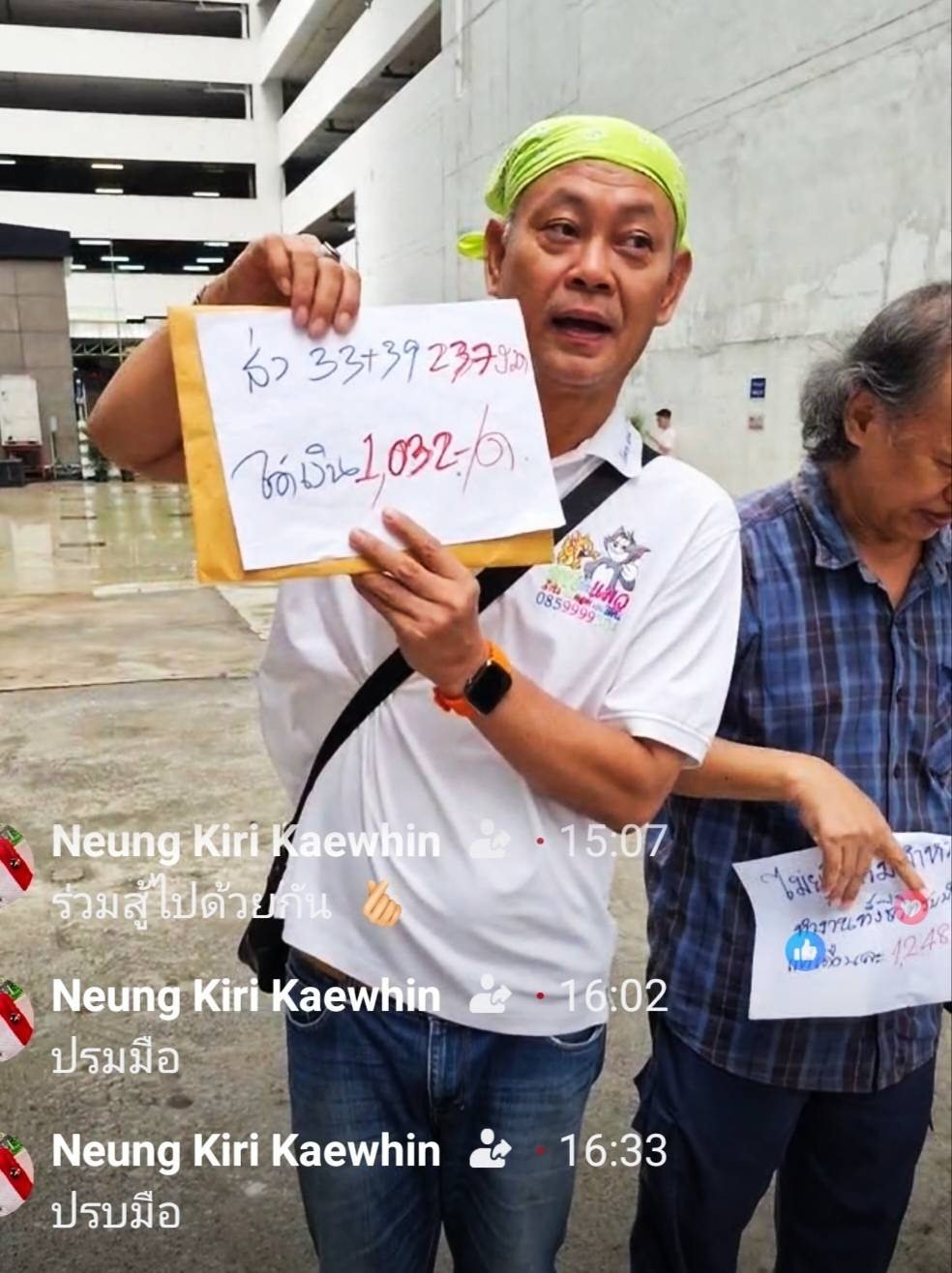
The signs the protesters carried on May 12 said more than any press release could. One man held up a handwritten note: "Section 33: 23 years. Section 39: 8 years. Pension: 1,032 baht." That is approximately $29 USD per month — less than one dollar a day — after 31 combined years of mandatory contributions.
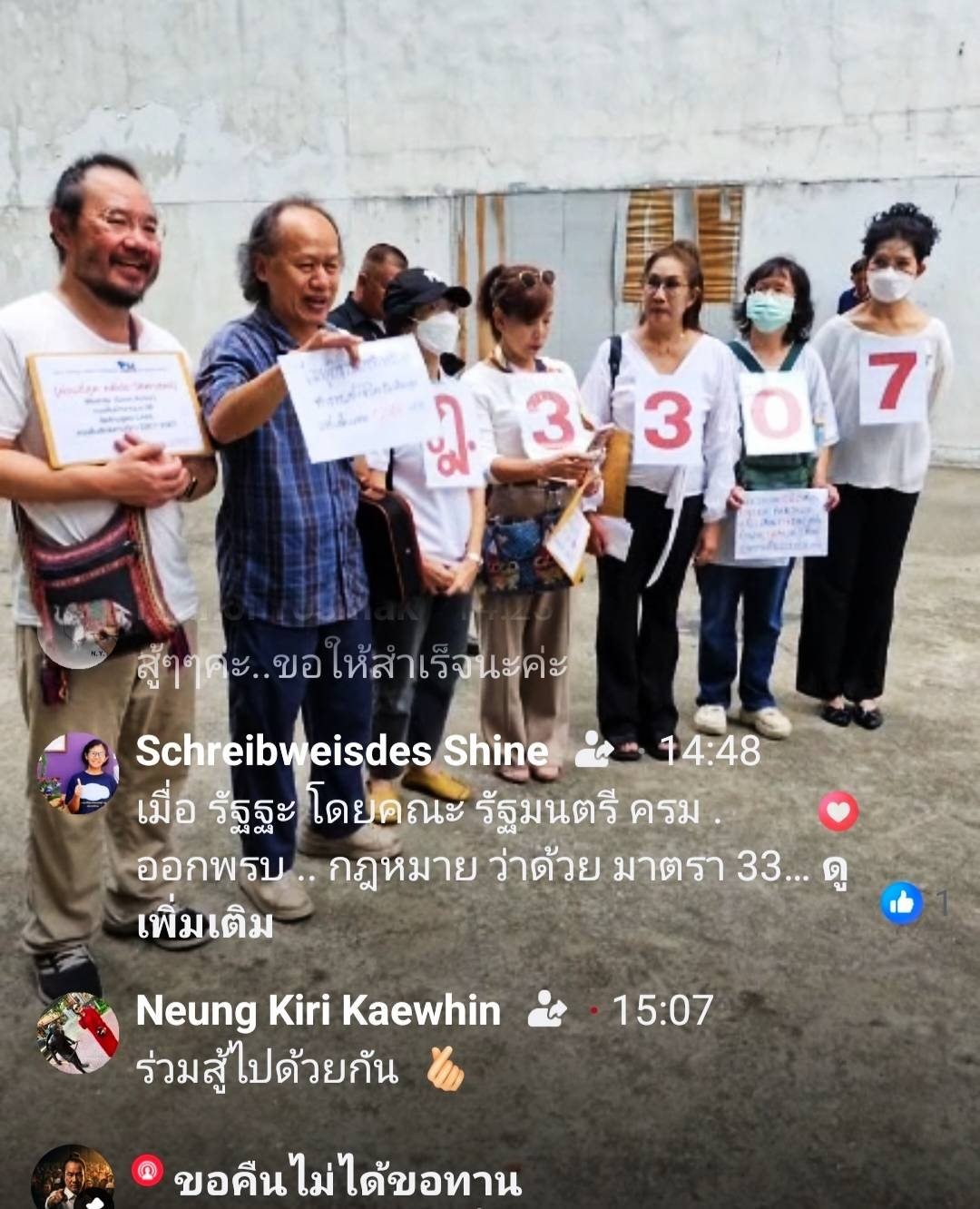
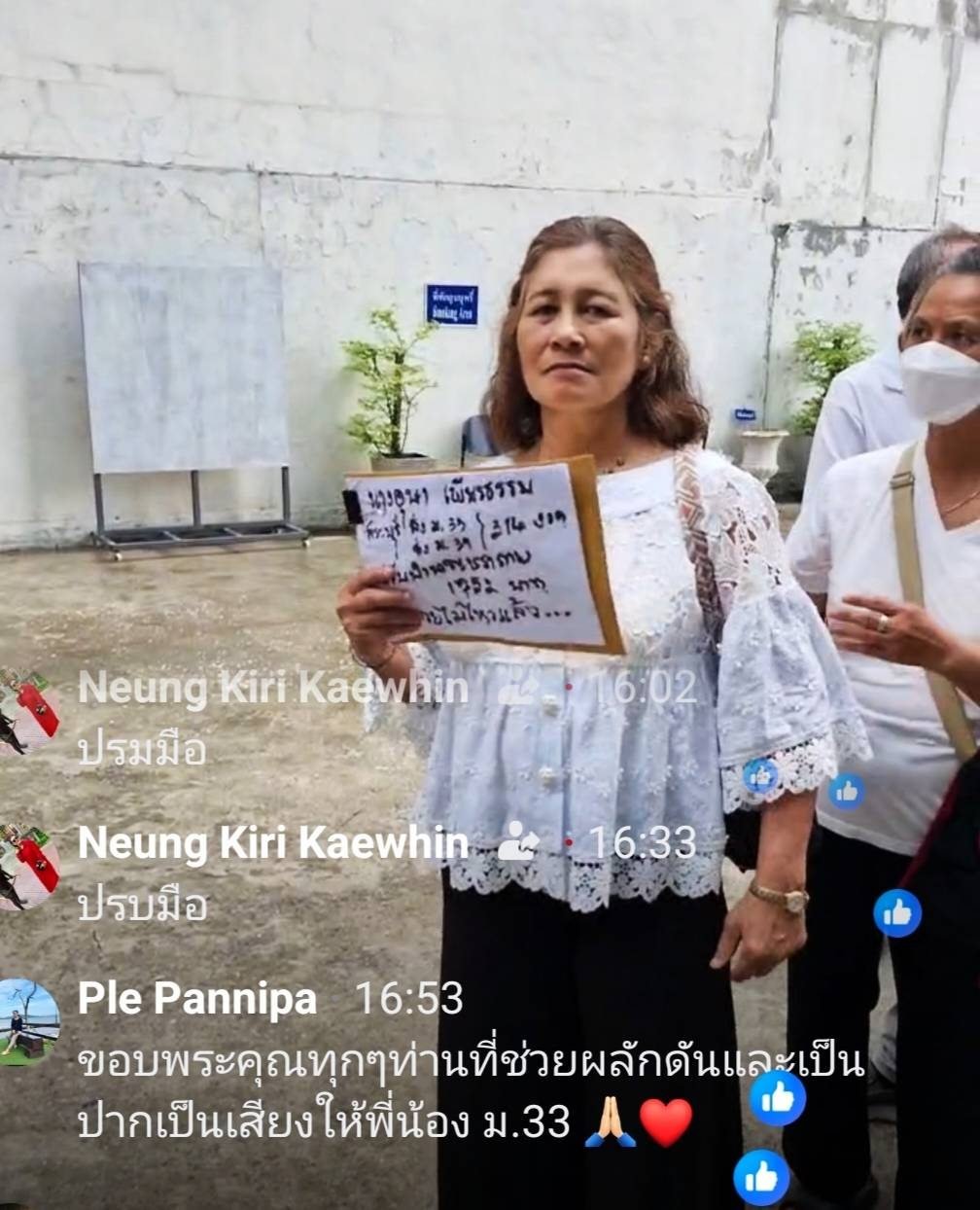
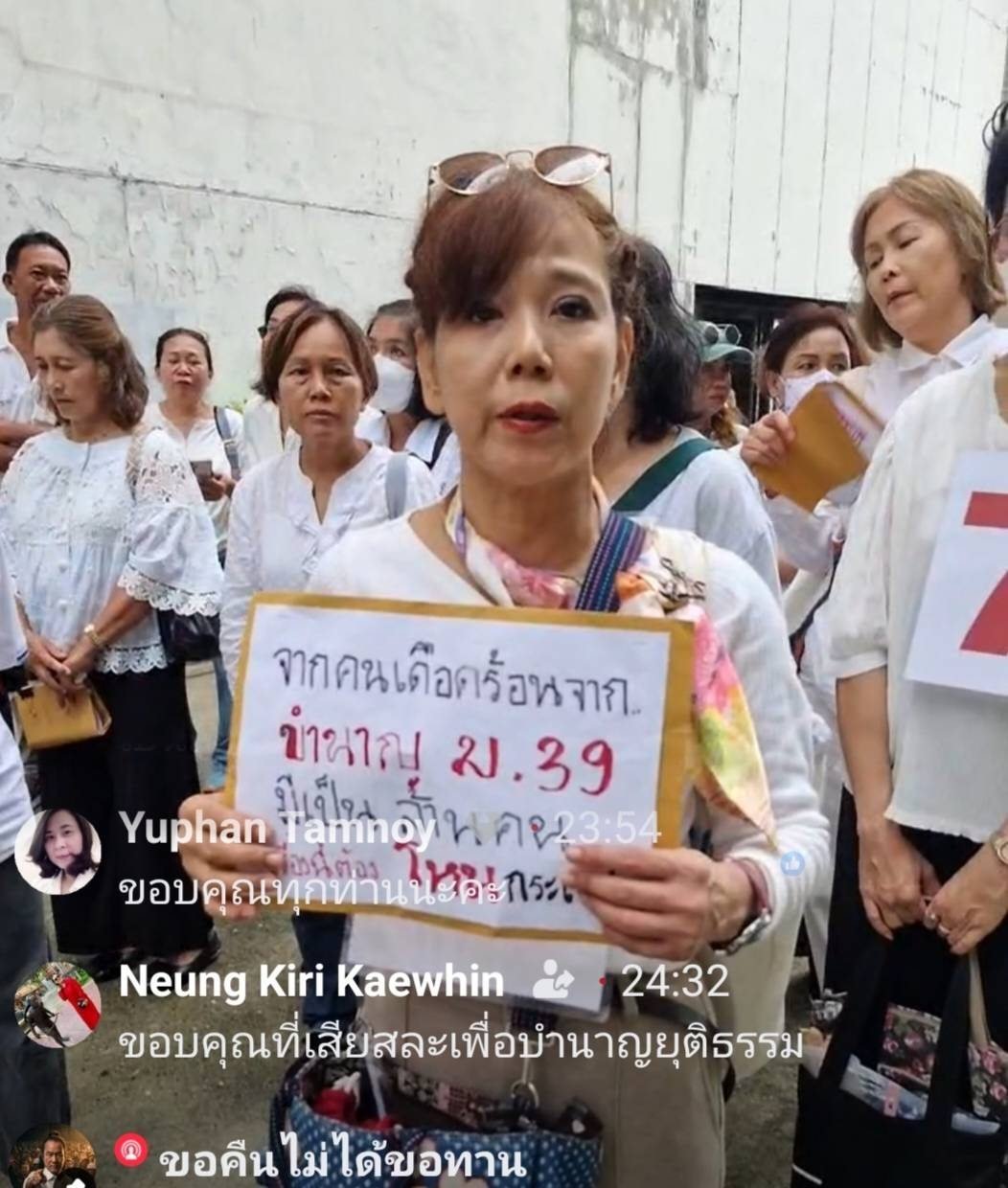
Real Pension Figures Carried by Protesters — May 12, 2026
These are not edge cases. According to data from the "Khor Keun Mai Dai Khor Taan" movement (roughly: "We're Reclaiming, Not Begging"), 551 out of 1,213 registered members receive pensions below Thailand's national poverty line of 3,700 baht per month. The cause, advocates say, is a single actuarial formula.
What Is the CARE Formula — and Why Is It Contested?
Thailand's Social Security Office (SSO) uses a calculation method called CARE (Career Average Revalued Earnings) to determine retirement pensions. In theory, CARE averages earnings across a worker's entire career. In practice, it creates a devastating trap for Section 39 contributors.
Workers who spent decades in Section 33 (employer-employee contributions, salary-based)
and then transitioned to Section 39 (self-employed, capped at ฿4,800/month)
have their entire contribution history averaged down to that ฿4,800 cap.
Their 15–20 years of higher salary contributions effectively disappear into the formula.
The Supreme Court of Thailand addressed precisely this issue in
Ruling No. 3307/2567 (2024), establishing that using the Section 39 ceiling
to dilute Section 33 entitlements constitutes an unlawful reduction of benefits.
The March: When the System Closes, Find Another Door
The group did not arrive at Channel 3's Maleenont Tower in Bangkok on impulse. Led by Boon Arayapon D.V.M., LL.B. — a veterinarian-turned-lawyer who has spent six years building this movement — the 33-person delegation had already exhausted conventional channels.
They had petitioned the Ministry of Labour multiple times. They had met with a Deputy Prime Minister at Government House. They had filed with the Lawyers Council of Thailand (under Royal Patronage), which confirmed the merits of their case and agreed to support a class action filing. Each time, the response from the state was silence.
At Channel 3, the group handed a formal open letter directly to a senior news editor, who recorded the delegation on camera and collected the documentation. The letter called on the program Hohn Krasae (Thailand's equivalent of a consumer advocacy talk show, hosted by celebrity journalist Noom Kanchai) to investigate and broadcast the story.
"When the state ignores you, you find the last door that's still open. For us, that door is the press."
— Boon Arayapon, founder of "Khor Keun Mai Dai Khor Taan" movement



The Broader Picture: Thailand's Pension Time Bomb
Thailand has approximately 25 million people enrolled across three tiers of Social Security. Section 33 covers formal private-sector employees. Section 39 covers those who leave formal employment but wish to maintain coverage — often mid-career women, caregivers, and workers in the gig economy. Section 40 covers informal workers.
The transition from Section 33 to Section 39 is common. The pension penalty for doing so is, according to this movement, severe and legally unjustified. The Lawyers Council's willingness to support a class action — potentially the largest pension-related class action in Thai legal history — suggests the legal argument has merit beyond activist rhetoric.
The movement's three core demands — known as the "Three Asks" (กฎหมาย 3 ขอ) — are:
- Choose — the right to elect the FAE-60 formula (Final Average Earnings, last 60 months) instead of CARE
- Return — reimbursement of the pension differential already lost to the CARE calculation
- Borrow — the right to take emergency loans against their own pension contributions
What Happens Next
The delegation plans to bring the case to the Senate Subcommittee and continue pressure through social media. With over 150,000 TikTok followers and 122,000 on Facebook, the movement has built an audience that mainstream media has not yet matched.
Whether Channel 3 or Hohn Krasae ultimately covers the story remains to be seen. But the open letter is now documented, the camera crew filmed the handover, and 1,213 names are on record as plaintiffs-in-waiting for a class action that could reshape how Thailand calculates pensions for millions of workers.
Section 39 (มาตรา 39): Voluntary continuation of Social Security coverage for workers who have left formal employment, with contributions capped at a base of ฿4,800/month.
CARE Formula: Career Average Revalued Earnings — the SSO's current pension calculation method.
FAE-60: Final Average Earnings over the last 60 months — the alternative formula this movement supports.
Dika 3307/2567: Supreme Court Ruling No. 3307 of Buddhist Era 2567 (2024 CE).