Imagine spending 27 years paying into a pension system — every single month, without fail. You planned your retirement around the numbers you were promised. Then, months before you could retire, the government quietly changed the formula. The pension you worked your whole life for? It just got cut by thousands of baht a month.
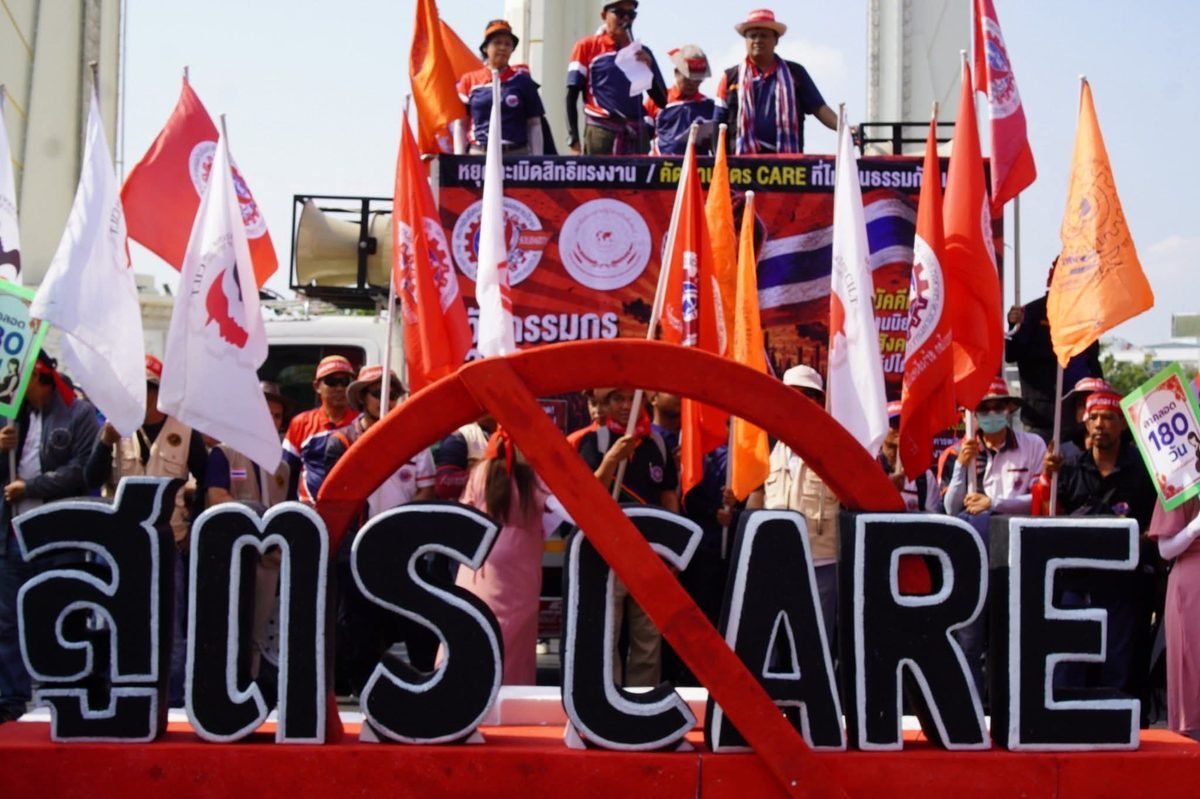
That is not a hypothetical. It is the reality facing millions of Thai workers under the proposed CARE pension formula — and on Thailand's Labour Day 2026, they decided to fight back.
The Promise That Was Made
Thailand's Social Security system has covered private-sector workers since 1990. Under Section 33, employed workers contribute 5% of their salary monthly — matched equally by their employer — toward a retirement pension.
Section 39 allows those who leave salaried employment (e.g. to start a business or care for family) to continue making voluntary contributions and preserve their pension rights.
Under the existing formula, your pension is calculated based on the average of your final 60 months of contributions. If you worked your way up and earned more in your final years, that's reflected in your pension. The system rewards loyalty and long tenure.
That was the deal. Workers built their entire retirement plan around it.

What Is the CARE Formula?
CARE stands for Career-Average Revalued Earnings. Instead of using your final 60 months, it calculates your pension using the average of every single month you contributed, going back to 1999 — then revalues past earnings to account for inflation.
Proponents argue it's fairer and more sustainable: it reflects your full working life, not just the final stretch. In theory, high earners who peaked at the end of their career can't "game" the system.
The problem? Thailand's labour market doesn't work like the theory.
The majority of Thai workers — especially those who spent time as Section 39 voluntary contributors — had their base wage capped at just ฿4,800/month during that period. Under CARE, those low early-career numbers get averaged into the pension calculation across their entire working life. The result: a dramatically lower baseline, and a dramatically lower pension — even after 25+ years of faithful contributions.

A Supreme Court Already Said No
This isn't just an opinion. Thailand's Supreme Court already ruled on this.
In Case No. 3307/2567, the Court held that the government cannot use the ฿4,800 base wage of Section 39 contributors to calculate and reduce the pension rights that had been built up under Section 33. The two contribution histories must be calculated separately — not averaged together in a way that penalises workers for transitioning between employment statuses.
"The pension formula, whatever it may be, must not be implemented in a way that causes workers to lose the rights they have already accrued." — Banner carried by protesters, Labour Day 2026, Bangkok
The CARE formula, critics argue, does exactly what the Supreme Court prohibited — it blends contribution periods in a way that systematically undervalues the earned rights of those who moved from Section 33 to Section 39.
Labour Day 2026: Three Unions, One Demand
On May 1st, 2026, three major labour federations marched jointly from Democracy Monument to Government House, delivering a formal 9-point demand to Deputy Prime Minister Yodchai Wongsawat. Point 5 was unambiguous:

The Three Demands
What the World Has Learned About Pension Reform
Thailand's situation is not unique — pension reform is one of the most politically charged policy areas in any country. But international experience suggests that how you reform matters just as much as what you reform.
The Macron government's pension reform — including raising the retirement age — triggered nationwide strikes and months of protests. The lesson: even technically sound reforms collapse without public trust and transparent consultation. The process matters as much as the policy.
The US Social Security system calculates benefits based on the 35 highest-earning years of a worker's career — not a simple career average. This is precisely the principle behind Thailand's "Best 60 Months" proposal: reward workers for their best contributions, not penalise them for low-earning years they couldn't avoid.
The Human Cost Behind the Numbers
The "Voices Wall" — an ongoing crowdsourced testimony project at boonarayapon.com — captures the human reality behind the policy debate. Here's what contributors report:
"I contributed for over 20 years — just to get ฿1,608 a month. Not enough for electricity and water. I keep working into old age because there's no choice." — Section 39 contributor, Nakhon Ratchasima, testimony submitted to the Voices Wall
"My savings of 1.9 million baht — that's not insurance money. It's my life's savings. And I get back just a few thousand baht a month." — Wanchai Khonthare, #461, Phetchabun, Class Action member
What Comes Next: Class Action in the Administrative Court
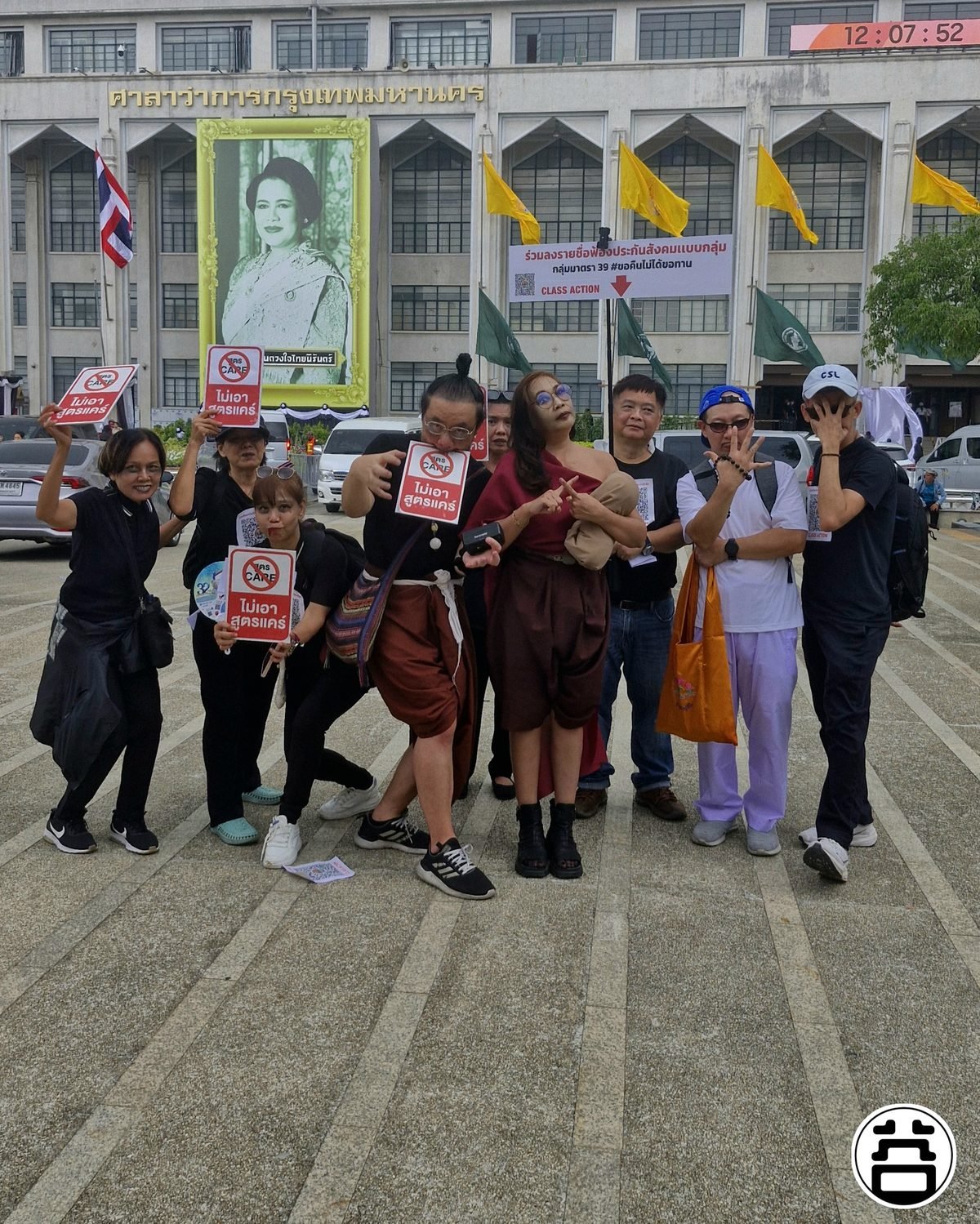
The Section 39 group has filed with the Lawyers Council of Thailand and is preparing a Class Action lawsuit against the Social Security Office in the Administrative Court. A successful ruling would not just compensate current plaintiffs — it would set a binding legal precedent for all Social Security contributors nationwide.
The government has received the Open Letter. The 30-day response deadline falls on May 7, 2026. If no substantive response is received, the group has stated it will formally escalate proceedings.
A System Built on Trust
Pension systems are, fundamentally, a social contract. Workers accept deferred wages — contributions taken from every paycheck — in exchange for a promise of security in retirement. When that promise is rewritten without genuine consultation, without transparency, and in ways that contradict existing judicial rulings, it doesn't just affect the math. It erodes the trust that makes the entire system work.
"We are not begging. We are reclaiming what was taken from us. Every voice on our wall is evidence that will be heard in court." — Boon Arayapon, Open Letter 1/2569, Labour Day 2026
Thailand's workers have made their position clear. Whether the government listens — and how the courts ultimately rule — will shape retirement security for millions of people who are still contributing today, still trusting a system to keep its promise.